In the hushed galleries of museums, where centuries-old masterpieces whisper their secrets to those who listen closely, one technique has consistently defined the very soul of classical oil painting: glazing. The method, a delicate dance of transparent color over a meticulously prepared underpainting, is not merely a step in a process but the final breath of life given to a canvas. It is the difference between a flat image and a luminous window into another world, between simple pigment and captured light.
To understand glazing is to understand the Old Masters themselves—artists like Titian, Rembrandt, and Vermeer, who wielded this knowledge not as a trick but as a fundamental language of visual poetry. Their canvases do not simply hang on the wall; they glow from within. This inner light, this depth that seems to recede infinitely, is the direct result of the glazing technique, a practice often shrouded in as much mystery today as it was in the Renaissance workshops. It is the classical mystery—the profound secret—that separates a competent painting from a transcendent one.
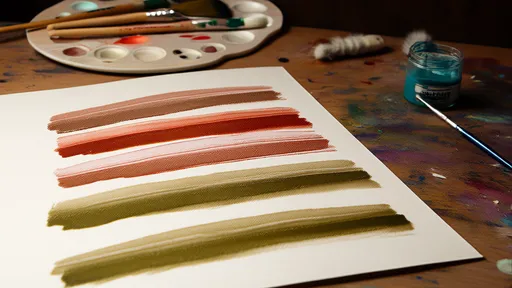
The foundational principle of glazing is deceptively simple. It involves the application of a thin, transparent film of oil paint, heavily diluted with a medium, over a completely dry underlying layer, known as the dead layer or imprimatura. This underlying layer is typically executed in grisaille (shades of gray) or verdaccio (a grayish-green), establishing the value structure—the light and shadow—of the entire composition. The magic occurs because light passes through this transparent colored glaze, hits the white or light-toned underpainting, and reflects back to the viewer’s eye. The result is a color of unbelievable saturation and luminosity that is physically impossible to achieve by simply mixing paints on a palette. A mix of Cadmium Red and White will produce a solid, opaque pink. But a transparent red glaze over a pure white ground produces a glowing, jewel-like crimson that seems to have its own internal light source.
The materials and preparation are where the art truly begins, demanding a patience that feels alien to our modern sensibilities. This is not a technique for the hasty. The underpainting must be bone-dry, a process that could take days or even weeks depending on the climate and the thickness of application. Rushing this step is a recipe for disaster, as subsequent layers will mix with the wet underpainting, creating muddiness and defeating the entire purpose of the glaze.
The choice of medium is critical. Historically, masters used various formulations of drying oils like linseed or walnut oil, often combined with resins like Venice Turpentine or copal to enhance gloss and transparency. Each artist had their own coveted recipe, guarded as fiercely as any state secret. The pigment itself must be chosen for its inherent transparency. Not all colors are created equal in this regard. Alizarin Crimson, Phthalo Blue, and Terre Verte are naturally transparent and perfect for glazing. Opaque colors like Cadmiums or Titanium White are useless here; they would block the light and obscure the work beneath. The glaze mixture is a delicate balance—a mere whisper of pigment suspended in a generous amount of medium, creating a consistency often compared to stained glass or colored water.
Application is an exercise in meticulous control. Artists use soft, wide brushes, often badger hair, to apply the glaze in smooth, even strokes, working quickly to avoid overlaps that would create darker, uneven patches. The goal is a perfectly uniform film of color. Any brushmark or imperfection will be magnified by the light passing through it. This part of the process is meditative, requiring a steady hand and a calm disposition. It is about finesse, not force.
The true power of glazing, however, lies in its iterative nature. A single glaze alters the painting subtly. The Old Masters understood that depth and complexity were built through many such layers, sometimes dozens of them. Each successive glaze, applied after the previous one has dried, deepens the color, enriches the shadows, and unifies the composition. It is a slow, deliberate build-up of visual information. A shadow is not a mix of black and brown; it is a deep ultramarine blue glaze over a burnt umber glaze over a gray underpainting. This complex optical mixing is what gives Old Master paintings their unparalleled richness. You feel you could walk into the dark recesses of a Rembrandt portrait because they are not merely dark—they are deep, filled with hints of color and history.
Beyond mere color, glazing was the master tool for achieving the most sought-after effects: the soft, hazy atmosphere of a Leonardo landscape, the palpable warmth of human flesh in a Titian nude, the cool, divine light radiating from a Vermeer interior. Flesh tones, in particular, were a triumph of the glazing technique. Instead of a monolithic peach color, skin was built from layers of transparent umbers, reds, and yellows over a cool gray-green underpainting. The greenish undertone (verdaccio) would subtly show through the warmer glazes, creating a vibrant, lifelike tension that makes the skin appear to pulse with blood just beneath the surface. The final highlight might not be white paint at all, but simply a tiny area of the white ground left untouched by any glaze, catching the light most brilliantly.
Why, then, has this magnificent technique faded from common practice? The answer lies in a shift in philosophy as much as in convenience. The Impressionists and the movements that followed championed alla prima (wet-on-wet) painting, embracing directness, the brushstroke, and the perception of the moment over the slow, methodical build-up of the studio. Their goal was to capture light with color directly on the canvas, not to simulate it through layered illusions. This was a liberation, but it also meant the deep, accumulated glow of glazing was traded for the immediate vibrancy of juxtaposed opaque colors. Furthermore, the industrial production of paints in the 19th century introduced new, brighter, but often more opaque, pigments that were less suited to the traditional glazing method.
Today, amidst a resurgence of interest in classical atelier training, the glazing technique is experiencing a renaissance. Contemporary realists are once again looking to the Old Masters not to copy them, but to learn their language. They are rediscovering that for certain depths of emotion and luminosity, there is simply no substitute. It offers a solution to the flatness that can plague even skilled representational work. Modern chemistry provides us with stable synthetic mediums and a vast array of reliable transparent pigments our predecessors could only dream of, making the process more accessible than ever, though no less demanding of skill.
Mastering glazing is more than acquiring a technical skill; it is a lesson in seeing. It teaches an artist to think in layers, to plan a painting from the ground up, and to understand that color and light are inseparable partners. It forces a slowing down, a deep engagement with the material that is almost spiritual. In a world of instant results, the slow, thoughtful application of a transparent glaze is an act of profound patience and faith—faith that each thin, almost invisible layer is contributing to a whole far greater than the sum of its parts.
In the end, the mystery, the secret, of the classical glaze is not a hidden formula or a lost ingredient. It is the understanding that true depth, in art as in life, is never achieved in a single bold stroke. It is built patiently, layer upon thin layer, each one transparent and honest, allowing the light from below to shine through and create something truly magical. It remains the most powerful tool for any painter seeking not just to depict light, but to capture it.
The world of fine art has always relied on innovative techniques to preserve the integrity of delicate mediums. Among these, pastel paintings present unique challenges due to their powdery nature. The development of specialized fixatives for pastel works represents a significant advancement in art conservation, allowing these vibrant creations to withstand the test of time while maintaining their distinctive texture and luminosity.
Pastel fixatives serve as invisible guardians of artwork, creating a molecular bond with pigment particles without altering the visual characteristics that make pastel works so distinctive. Unlike traditional varnishes that create a glossy film over oil paintings, quality pastel fixatives penetrate between pigment particles, stabilizing them while preserving the matte finish and velvety texture that collectors and artists cherish. This delicate balance between protection and preservation requires sophisticated chemical formulations that have evolved significantly since early fixative attempts using simple resins dissolved in alcohol.
The chemistry behind modern pastel fixatives involves complex polymer solutions designed to create flexible, durable bonds with pigment particles. Contemporary formulations typically use acrylic resins or other synthetic polymers suspended in a solvent base that evaporates completely after application. These advanced materials differ from early shellac-based solutions that often yellowed over time or became brittle with age. The molecular structure of modern fixatives allows for slight movement of the paper support while maintaining pigment adhesion - crucial for works that may experience changes in humidity or temperature.
Application techniques play an equally important role in the successful preservation of pastel works. Professional conservators recommend spraying fixative in multiple light layers rather than single heavy applications. This gradual approach prevents the saturation of paper fibers which can lead to warping or pigment displacement. The ideal distance for spraying ranges between 10-12 inches from the artwork surface, with each layer allowed to dry completely before applying the next. Many experts suggest holding the spray can at a consistent 45-degree angle to ensure even coverage without creating concentrated spots of fixative.
Environmental considerations have become increasingly important in fixative formulation. Many manufacturers now offer low-VOC (volatile organic compound) options that provide equivalent protection while minimizing health risks to artists and environmental impact. These water-based alternatives have gained popularity in studio environments, though some traditionalists maintain that certain alcohol-based formulations provide superior results for specific pastel techniques. The debate continues within artistic circles, with ongoing research into bio-based fixatives that might offer sustainable solutions without compromising archival quality.
The interaction between fixative and different pastel types presents another layer of complexity. Soft pastels, with their high pigment concentration and minimal binder, require particular care during fixation to prevent color shifts or darkening. Harder pastels and oil pastels respond differently to various fixative formulations, necessitating artist experimentation to achieve optimal results. Many professional pastelists develop personal protocols through years of practice, often creating custom approaches for different stages of a work - using light fixation during the building phase and finalizing with more thorough applications upon completion.
Archival testing has revealed that properly fixed pastel works can rival the longevity of oil paintings when created with quality materials and stored under appropriate conditions. Accelerated aging tests conducted by conservation laboratories demonstrate that contemporary fixative formulations can protect pigment particles for centuries without significant alteration to color or texture. These findings have encouraged major museums to reconsider pastel works as permanent collection pieces rather than fragile objects requiring excessive handling restrictions.
Historical context sheds light on how far pastel preservation has advanced. Eighteenth-century pastel portraits by masters like Rosalba Carriera or Maurice Quentin de La Tour survived despite primitive fixation methods, often relying on glassine paper or careful framing to protect surfaces. The development of the first commercial fixatives in the 19th century represented a breakthrough, though these early formulations often compromised the delicate nuances of pastel strokes. Today's artists benefit from centuries of technical refinement, allowing for creative expression without sacrificing permanence.
The future of pastel fixation technology points toward increasingly specialized solutions. Nanotechnology applications show promise for creating molecular-level protective barriers that would be virtually undetectable to the eye or touch. Research into pH-neutral formulations aims to eliminate all risk of paper degradation over extended periods. Some laboratories are experimenting with UV-absorbing additives that could provide additional protection against light damage without affecting color integrity. These innovations continue to expand the possibilities for pastel as a serious medium for both contemporary artists and conservators of historical works.
Professional art conservation circles have established specific protocols for dealing with unfixed historical pastel works. These delicate procedures often involve localized fixation under controlled conditions, sometimes using customized solutions applied with precision airbrushes rather than aerosol sprays. The conservation approach must balance stabilization needs with preservation of original texture and the artist's intentional surface qualities. Such meticulous work highlights the importance of proper initial fixation in contemporary practice to avoid complex conservation challenges for future generations.
Artist education remains crucial in promoting best practices for pastel fixation. Many art schools now include detailed instruction on fixation techniques as part of their curriculum, emphasizing the relationship between application methods and long-term preservation. Workshops led by master pastelists frequently devote significant time to demonstrating proper fixation approaches for different styles and techniques. This knowledge transfer ensures that emerging artists understand fixation not as an afterthought, but as an integral part of the creative process that affects how their work will endure.
The commercial market for pastel fixatives has expanded dramatically in recent decades, offering artists an array of specialized products. From workable fixatives that allow for continued layering to final fixatives designed for maximum protection, the options cater to diverse technical requirements. Some manufacturers even offer tinted fixatives that can subtly enhance certain color groups or pH-balanced formulations specifically for delicate papers. This product diversification reflects the growing recognition of pastel as a versatile and permanent artistic medium worthy of sophisticated preservation technology.
Scientific analysis of aged pastel works provides valuable feedback for fixative improvement. Advanced imaging techniques allow conservators to examine how different fixation methods have performed over decades or even centuries. This forensic approach to art materials science informs the ongoing refinement of commercial products, creating a virtuous cycle of innovation. Microscopic examination reveals how various formulations interact with pigment particles at a structural level, guiding chemists in developing ever more effective solutions.
As pastel continues to gain recognition in the contemporary art market, the importance of proper fixation becomes increasingly apparent to collectors and galleries. Auction houses now frequently include fixation information in provenance documentation, recognizing its impact on long-term value. Insurance appraisers consider fixation quality when assessing works for coverage, knowing that properly preserved pieces will maintain their condition far into the future. This institutional recognition underscores how fixation technology has elevated pastel from a supposedly ephemeral medium to one embraced by serious collectors.
The dialogue between artists, chemists, and conservators continues to push the boundaries of what's possible in pastel preservation. Annual symposiums bring together these diverse experts to share findings and set research priorities. Such collaborations have led to breakthroughs like humidity-resistant formulations and fixatives that accommodate mixed-media approaches. This interdisciplinary approach ensures that pastel fixation technology will keep pace with evolving artistic practices while maintaining uncompromising standards for permanence.
Ultimately, the story of pastel fixatives reflects broader themes in art materials science - the marriage of tradition and innovation, the balance between immediate artistic needs and long-term preservation, and the ongoing quest to perfect the tools of creative expression. As formulation technology advances, artists gain greater freedom to work with this luminous medium without concerns about its durability, ensuring that future generations will experience pastel works with the same freshness and vitality intended by their creators.
By /Aug 11, 2025
By /Aug 11, 2025
By /Aug 11, 2025
By /Aug 11, 2025
By /Aug 11, 2025

By /Aug 11, 2025
By /Aug 11, 2025
By /Aug 19, 2025
