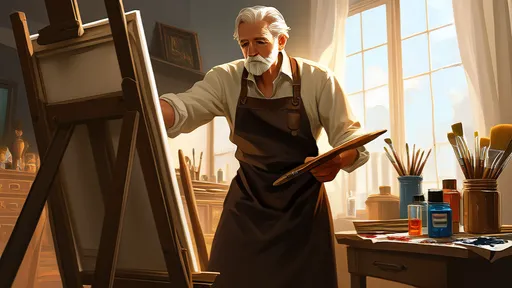
The art world has witnessed a resurgence of interest in traditional oil painting techniques, particularly the indirect method known as glazing. This layered approach, which dominated European painting from the Renaissance through the 19th century, creates luminous depth through successive transparent applications that modern direct painting often struggles to replicate. Contemporary artists are rediscovering how these historical techniques can solve contemporary aesthetic challenges while connecting them to centuries of artistic heritage.
Unlike alla prima (wet-on-wet) methods where painters mix colors on the palette, indirect painting builds images through multiple transparent layers called glazes. Each thin veil of pigment suspended in medium modifies what lies beneath, creating optical mixtures that vibrate with inner light. The technique demands patience - sometimes requiring weeks between layers for proper drying - but rewards practitioners with chromatic richness impossible to achieve through direct mixing. Titian's golden highlights, Rembrandt's glowing shadows, and Vermeer's pearlescent skies all owe their magic to this disciplined layering process.
Modern practitioners face unique challenges when adopting these Old Master techniques. Contemporary linseed oils and resins behave differently than those used by Renaissance painters, requiring adapted recipes for painting mediums. Some artists meticulously recreate historical materials, grinding their own pigments and brewing walnut oil mediums, while others develop modern equivalents using alkyd resins for faster drying times. The current revival benefits from scientific analysis of masterworks, allowing today's painters to understand exactly how Rubens achieved his flesh tones or how Caravaggio built his dramatic chiaroscuro.
Educational institutions have noticed this growing interest. Several European academies now offer specialized programs in historical techniques, complete with workshops on preparing traditional lead-primed panels. In the United States, private ateliers report increased enrollment in master copy programs where students spend months recreating Baroque paintings layer by layer. This educational shift represents more than nostalgia; students discover how indirect methods develop their ability to see subtle value relationships and understand color theory at profound levels.
The commercial art market has begun recognizing the value of contemporary works using historical techniques. Galleries specializing in classical realism report collectors paying premiums for paintings demonstrating masterful glazing. "There's an intimacy to properly executed indirect painting," notes London gallerist Eleanor Whitmore. "The surface has a depth that changes with viewing angle and lighting conditions - it breathes in ways that flat opaque painting simply can't." Auction results confirm this trend, with contemporary realist works showing strong indirect technique commanding prices rivaling abstract pieces by established names.
Digital technology plays an unexpected role in this traditional medium's revival. High-resolution scans of masterworks allow artists to study brushwork invisible to the naked eye, while spectral imaging reveals abandoned compositions beneath famous paintings. Some painters project these images onto their canvases to understand the build-up of layers, though purists argue this shortcuts the essential discipline of developing an artist's eye. Online communities share glaze recipes and drying time experiments, creating a global network of technical knowledge that would have taken lifetimes to accumulate during the Renaissance.
Conservation concerns have also driven renewed interest in historical methods. As modern paintings from the mid-20th century show premature cracking and discoloration, conservators note how well many Old Master paintings have endured. "The indirect method isn't just aesthetically superior," asserts Metropolitan Museum conservator Dr. Helena Pierce, "it's often more archivally sound. These paintings were meant to last centuries, not decades." Contemporary artists concerned with longevity increasingly adopt these time-tested approaches, particularly for commissioned portraits and public works.
Beyond technical considerations, the philosophical implications of indirect painting resonate in our accelerated digital age. The method demands contemplation at every stage - from initial imprimatura to final glazes - creating a meditative practice starkly opposed to instant results culture. Artists describe how the slow process changes their relationship with both the work and their perception of time. "You stop thinking in terms of finishing," explains painter Gabriel Moretti, "and start experiencing each layer as a complete state of being. The painting teaches you patience as much as technique."
Exhibitions comparing historical and contemporary indirect works reveal surprising continuities. When hung alongside Vermeer's "Girl with a Pearl Earring," a 21st-century portrait using identical layering techniques demonstrates how the method still achieves that enigmatic glow no direct approach can capture. Museums now actively commission contemporary artists to create new works using historical methods specifically for these dialogic exhibitions, bridging centuries through shared technique.
The future of indirect painting appears vibrant as younger artists blend traditional methods with contemporary subjects. Urban landscapes gain unexpected luminosity through glazing techniques developed for religious altarpieces. Abstract artists employ transparent layers to create depth that challenges spatial perception. Even digital artists study Old Master glazing to enhance their rendering skills. This cross-pollination suggests the technique's revival isn't mere historical reenactment, but rather the rediscovery of a visual language with untapped potential for contemporary expression.
As the art world cycles through fleeting trends, the enduring power of indirect painting reminds us that some discoveries aren't new inventions, but rather the recovery of forgotten wisdom. The current revival represents neither rejection of modernism nor uncritical traditionalism, but rather a thoughtful integration of historical knowledge with contemporary vision. In studios worldwide, the patient application of transparent layers continues its centuries-old dialogue between discipline and revelation, proving that certain artistic truths remain timeless.
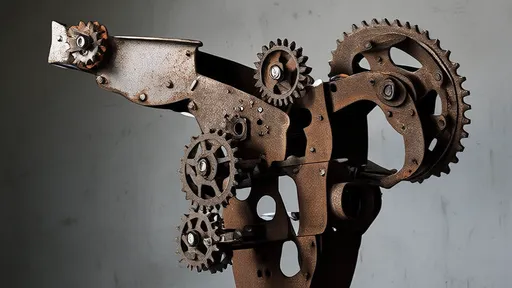
In the realm of contemporary art, few mediums capture the spirit of transformation as vividly as metal welding sculpture. What was once discarded as industrial waste—rusted gears, bent pipes, and shattered machine parts—finds new life under the torch of a welder’s hand. This art form, often overlooked in traditional galleries, thrives in the intersection of craftsmanship and environmental consciousness, where scrap iron is not merely recycled but reimagined.
The process begins with scavenging. Artists comb through junkyards, abandoned factories, and construction sites, seeking materials with hidden potential. A twisted beam becomes a sinewy muscle; a cluster of bolts transforms into a swarm of insects. There’s an alchemy here, where the weight of history—the factory labor, the mechanical failures, the passage of time—is preserved even as the metal is reborn. The sculptor’s eye sees not decay but raw material, waiting to be reassembled into something wholly new.
Welding itself is a dance of precision and improvisation. Unlike marble carving or bronze casting, where mistakes can be catastrophic, welded sculpture allows for adjustments mid-creation. The artist might fuse two pieces, step back, then angle a third fragment to alter the composition entirely. This fluidity mirrors the ethos of the medium: nothing is permanent, not even the act of creation. Sparks fly, metals warp, and the sculpture evolves in real time, often revealing its final form only in the last moments of work.
The aesthetic of welded scrap iron is inherently paradoxical. It celebrates roughness—the pitted surfaces, the jagged edges—while demanding meticulous craftsmanship. A poorly executed weld can ruin the structural integrity of a piece, yet too much polish can strip away the raw energy that defines the genre. The best works strike a balance, honoring the material’s industrial past while elevating it to the realm of art. Think of Eduardo Paolozzi’s chaotic robot-like figures or David Smith’s geometric abstractions: both artists embraced the "flaws" of their materials, turning rust and asymmetry into visual language.
Critics often debate whether welded sculpture belongs to the past or the future. Its materials are undeniably tied to the 20th century’s industrial age, yet its ethos—sustainability, adaptability, repurposing—feels urgently contemporary. In an era of climate crisis, artists working with scrap metal are unwitting environmentalists. Their work asks: What do we discard, and why? What might we build from the fragments? A welded sculpture of a tree made from car parts isn’t just a visual metaphor; it’s a quiet protest against waste.
Perhaps the most compelling aspect of this art form is its accessibility. Unlike traditional sculpture, which often requires expensive materials and foundries, welded art can emerge from a backyard workshop. Self-taught artists thrive in this space, their lack of formal training becoming an asset rather than a limitation. There’s a democratic spirit here, a reminder that art isn’t confined to museums—it can rise from a pile of rubble, sparked into being by imagination and a welding torch.
As exhibitions increasingly feature welded sculptures alongside paintings and digital art, the medium is gaining recognition as a vital thread in the tapestry of contemporary art. Galleries in post-industrial cities—Detroit, Sheffield, Dortmund—have become hubs for this movement, showcasing works that pulse with the energy of their reclaimed materials. The message is clear: beauty isn’t something we create from nothing. It’s something we uncover, piece by piece, in what the world has thrown away.
By /Aug 11, 2025
By /Aug 19, 2025
By /Aug 11, 2025
By /Aug 11, 2025
By /Aug 11, 2025
By /Aug 11, 2025
By /Aug 11, 2025
By /Aug 11, 2025
