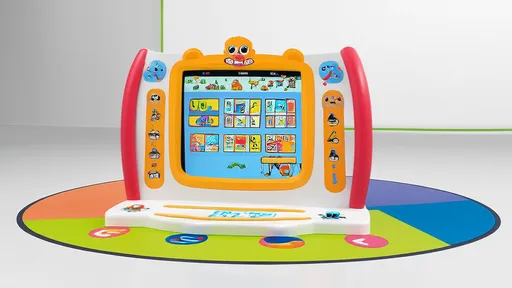
In recent years, the intersection of technology and education has given rise to innovative approaches to engage young minds. Among these, interactive installations designed for children have emerged as a powerful tool, blending play with pedagogy. These installations are not merely flashy gadgets; they represent a thoughtful fusion of game mechanics and educational content, creating immersive environments where learning feels like an adventure.
The philosophy behind these designs stems from the understanding that children learn best when they are actively involved and emotionally invested. Traditional methods often struggle to maintain attention, but gamified interfaces tap into natural curiosity and the desire for exploration. By incorporating elements such as touch-sensitive panels, motion sensors, and augmented reality, designers create multi-sensory experiences that make abstract concepts tangible.
Why does this approach work so effectively? The answer lies in the psychology of engagement. Games inherently provide feedback loops—immediate rewards for actions taken—which reinforce learning. When a child solves a puzzle or completes a challenge in an interactive installation, the system might respond with lights, sounds, or visual animations. This instant gratification not only boosts motivation but also solidifies the connection between action and outcome, a cornerstone of cognitive development.
One striking example is the use of interactive floors in museums. These installations transform passive observation into active participation. As children step on projected images of planets, for instance, they trigger information about each celestial body. The physical movement paired with visual and auditory feedback creates a memorable learning moment far more impactful than reading a static display.
Designing these interfaces requires a delicate balance. The technology must be robust enough to withstand enthusiastic little hands (and feet), yet intuitive enough that instructions become unnecessary. The most successful designs employ universal symbols, vibrant colors, and clear audio cues to guide users naturally through the experience. Complexity is hidden beneath layers of simplicity, allowing children to focus on discovery rather than mechanics.
The social dimension of these installations often gets overlooked but proves equally vital. Many setups encourage collaboration, whether through shared control panels or group challenges. This not only teaches subject matter but also nurtures teamwork and communication skills. In an era where screen time often means isolated activity, interactive installations bring children together in physical spaces to learn collectively.
Critics sometimes question whether the entertainment value overshadows educational substance. However, research indicates that the emotional resonance created by these playful interfaces leads to better information retention. When children associate learning with positive emotions, they develop lifelong curiosity rather than viewing education as a chore. The key lies in seamless integration—where the fun elements serve the educational objectives rather than distract from them.
Looking ahead, the potential for adaptive technologies promises even more personalized experiences. Imagine installations that adjust difficulty based on a child's responses or that incorporate biometric feedback to optimize engagement. As artificial intelligence and machine learning advance, so too will the sophistication of these educational tools. Yet the core principle remains unchanged: when learning feels like play, the mind opens willingly to new knowledge.
The evolution of children's interactive installations represents more than technological progress—it reflects a fundamental shift in how we approach early education. By honoring the natural ways children explore their world, these designs don't just teach facts; they cultivate the joy of learning itself. In classrooms, museums, and public spaces worldwide, these vibrant interfaces are quietly revolutionizing education, one playful interaction at a time.
The art world has witnessed a resurgence of interest in traditional oil painting techniques, particularly the indirect method known as glazing. This layered approach, which dominated European painting from the Renaissance through the 19th century, creates luminous depth through successive transparent applications that modern direct painting often struggles to replicate. Contemporary artists are rediscovering how these historical techniques can solve contemporary aesthetic challenges while connecting them to centuries of artistic heritage.
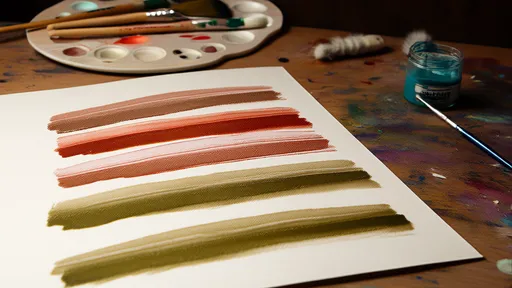
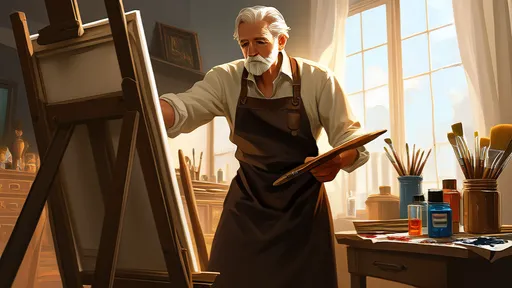
Unlike alla prima (wet-on-wet) methods where painters mix colors on the palette, indirect painting builds images through multiple transparent layers called glazes. Each thin veil of pigment suspended in medium modifies what lies beneath, creating optical mixtures that vibrate with inner light. The technique demands patience - sometimes requiring weeks between layers for proper drying - but rewards practitioners with chromatic richness impossible to achieve through direct mixing. Titian's golden highlights, Rembrandt's glowing shadows, and Vermeer's pearlescent skies all owe their magic to this disciplined layering process.
Modern practitioners face unique challenges when adopting these Old Master techniques. Contemporary linseed oils and resins behave differently than those used by Renaissance painters, requiring adapted recipes for painting mediums. Some artists meticulously recreate historical materials, grinding their own pigments and brewing walnut oil mediums, while others develop modern equivalents using alkyd resins for faster drying times. The current revival benefits from scientific analysis of masterworks, allowing today's painters to understand exactly how Rubens achieved his flesh tones or how Caravaggio built his dramatic chiaroscuro.
Educational institutions have noticed this growing interest. Several European academies now offer specialized programs in historical techniques, complete with workshops on preparing traditional lead-primed panels. In the United States, private ateliers report increased enrollment in master copy programs where students spend months recreating Baroque paintings layer by layer. This educational shift represents more than nostalgia; students discover how indirect methods develop their ability to see subtle value relationships and understand color theory at profound levels.
The commercial art market has begun recognizing the value of contemporary works using historical techniques. Galleries specializing in classical realism report collectors paying premiums for paintings demonstrating masterful glazing. "There's an intimacy to properly executed indirect painting," notes London gallerist Eleanor Whitmore. "The surface has a depth that changes with viewing angle and lighting conditions - it breathes in ways that flat opaque painting simply can't." Auction results confirm this trend, with contemporary realist works showing strong indirect technique commanding prices rivaling abstract pieces by established names.
Digital technology plays an unexpected role in this traditional medium's revival. High-resolution scans of masterworks allow artists to study brushwork invisible to the naked eye, while spectral imaging reveals abandoned compositions beneath famous paintings. Some painters project these images onto their canvases to understand the build-up of layers, though purists argue this shortcuts the essential discipline of developing an artist's eye. Online communities share glaze recipes and drying time experiments, creating a global network of technical knowledge that would have taken lifetimes to accumulate during the Renaissance.
Conservation concerns have also driven renewed interest in historical methods. As modern paintings from the mid-20th century show premature cracking and discoloration, conservators note how well many Old Master paintings have endured. "The indirect method isn't just aesthetically superior," asserts Metropolitan Museum conservator Dr. Helena Pierce, "it's often more archivally sound. These paintings were meant to last centuries, not decades." Contemporary artists concerned with longevity increasingly adopt these time-tested approaches, particularly for commissioned portraits and public works.
Beyond technical considerations, the philosophical implications of indirect painting resonate in our accelerated digital age. The method demands contemplation at every stage - from initial imprimatura to final glazes - creating a meditative practice starkly opposed to instant results culture. Artists describe how the slow process changes their relationship with both the work and their perception of time. "You stop thinking in terms of finishing," explains painter Gabriel Moretti, "and start experiencing each layer as a complete state of being. The painting teaches you patience as much as technique."
Exhibitions comparing historical and contemporary indirect works reveal surprising continuities. When hung alongside Vermeer's "Girl with a Pearl Earring," a 21st-century portrait using identical layering techniques demonstrates how the method still achieves that enigmatic glow no direct approach can capture. Museums now actively commission contemporary artists to create new works using historical methods specifically for these dialogic exhibitions, bridging centuries through shared technique.
The future of indirect painting appears vibrant as younger artists blend traditional methods with contemporary subjects. Urban landscapes gain unexpected luminosity through glazing techniques developed for religious altarpieces. Abstract artists employ transparent layers to create depth that challenges spatial perception. Even digital artists study Old Master glazing to enhance their rendering skills. This cross-pollination suggests the technique's revival isn't mere historical reenactment, but rather the rediscovery of a visual language with untapped potential for contemporary expression.
As the art world cycles through fleeting trends, the enduring power of indirect painting reminds us that some discoveries aren't new inventions, but rather the recovery of forgotten wisdom. The current revival represents neither rejection of modernism nor uncritical traditionalism, but rather a thoughtful integration of historical knowledge with contemporary vision. In studios worldwide, the patient application of transparent layers continues its centuries-old dialogue between discipline and revelation, proving that certain artistic truths remain timeless.
By /Aug 11, 2025
By /Aug 11, 2025
By /Aug 11, 2025
By /Aug 11, 2025
By /Aug 11, 2025
By /Aug 11, 2025
By /Aug 19, 2025
By /Aug 11, 2025