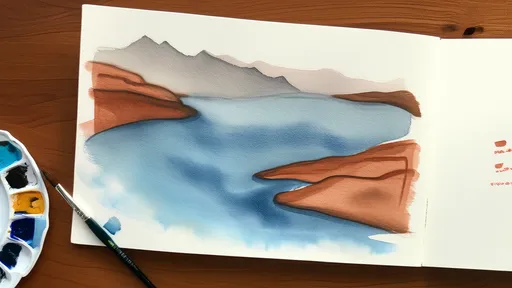
The art of watercolor painting is often celebrated for its fluidity and transparency, but few techniques capture its essence as beautifully as the wet-on-wet method. Wet-on-wet, or the practice of applying pigment to a damp surface, allows colors to blend organically, creating soft edges and luminous transitions. This approach is particularly revered for its ability to mimic the delicate interplay of light and shadow in nature. However, mastering this technique requires more than just a casual understanding of water and pigment—it demands a keen sense of timing, control, and an almost intuitive feel for how colors interact on paper.
At the heart of wet-on-wet painting lies the concept of water control. Unlike other mediums where the artist fights against drying times, watercolor thrives on it. The dampness of the paper becomes a collaborator, guiding the pigment into unexpected but often breathtaking patterns. Too much water, and the colors bleed uncontrollably, losing definition. Too little, and the magic of seamless blending vanishes. The key is to strike a balance where the paper is just wet enough to allow colors to mingle without drowning them. This delicate equilibrium is what separates a mediocre wash from a masterpiece.
One of the most captivating aspects of this technique is its ability to create ethereal gradients and subtle textures. When two colors meet on a wet surface, they don’t just mix—they dance. The pigments push and pull against one another, forming blooms, backruns, and cauliflowers (those fern-like patterns watercolorists either love or loathe). These "happy accidents," as they’re often called, aren’t entirely random. A skilled artist can anticipate and even manipulate them by adjusting the tilt of the paper, the consistency of the paint, or the humidity in the room. It’s this interplay between control and surrender that makes wet-on-wet so exhilarating.
The emotional resonance of a well-executed wet-on-wet passage is undeniable. There’s a dreamlike quality to the way colors dissolve into one another, suggesting rather than dictating form. This is why the technique is so frequently employed in landscapes—skies, water, and distant foliage all benefit from that soft, diffused edge. But it’s not just for backgrounds. Contemporary artists are pushing boundaries by using wet-on-wet for portraits and abstract work, proving that this centuries-old method still has surprises to offer. The transparency of the medium allows for layering, so subsequent glazes can intensify hues without sacrificing luminosity.
Critics might argue that wet-on-wet lacks precision, but that misses the point entirely. The beauty of this approach lies in its unpredictability—the way it forces the artist to respond rather than dictate. It’s a conversation between creator and medium, one where both parties have a say in the final outcome. This requires not just technical skill but also a willingness to embrace imperfection. The most compelling wet-on-wet paintings often have moments of "loss," where edges disappear into washes, inviting the viewer to complete the image in their mind’s eye. In an age of digital perfection, there’s something profoundly human about that.
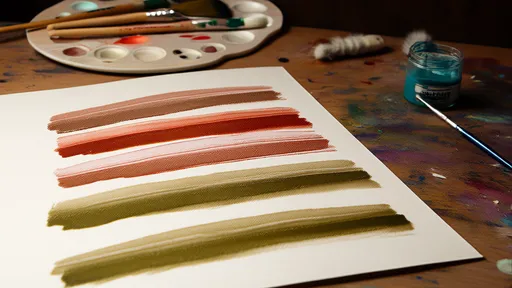
Materials play a crucial role in achieving successful wet-on-wet effects. Paper weight, texture, and sizing all influence how water behaves. Rough papers hold pools of pigment differently than hot-pressed surfaces, while absorbent papers can suck the life out of a wash if not handled properly. Pigment choice matters too—some colors granulate beautifully, separating into component hues as they dry, while others stain aggressively. And let’s not forget brushes: a thirsty mop brush can lift excess water, while a pointed round can deposit pigment with surgical precision when needed. The tools aren’t just passive implements; they’re active participants in the painting process.
Perhaps what makes wet-on-wet so enduringly popular is its accessibility. Beginners can achieve pleasing results early on, which encourages further exploration. Yet the technique has enough depth to challenge masters for a lifetime. Every painting becomes an experiment, a chance to discover how cerulean blue will react with burnt sienna on a damp winter morning versus a humid summer afternoon. There are always new variables, new reactions to observe. In this sense, wet-on-wet isn’t just a technique—it’s a lifelong pursuit, one that keeps watercolorists returning to their palettes with childlike wonder, no matter how many years they’ve been painting.
The interplay between light and shadow takes center stage in contemporary sculpture exhibitions, where lighting design transcends mere illumination to become an active participant in shaping spatial narratives. As curators and lighting designers collaborate to reveal the hidden dimensions of three-dimensional forms, shadow control emerges as both a technical challenge and an artistic opportunity. The current discourse in exhibition design increasingly recognizes how carefully modulated darkness can define volumes as powerfully as directed light.
Modern sculpture parks and gallery installations demonstrate a growing sophistication in shadow manipulation techniques. At the recent Venice Biennale Arte 2023, several pavilions showcased radical approaches to darkness as a positive design element rather than mere absence of light. One particularly striking bronze installation appeared to change its silhouette throughout the day as programmed LED arrays selectively highlighted different planes while allowing others to recede into calculated obscurity. This dynamic interplay created the illusion of kinetic movement in static objects.
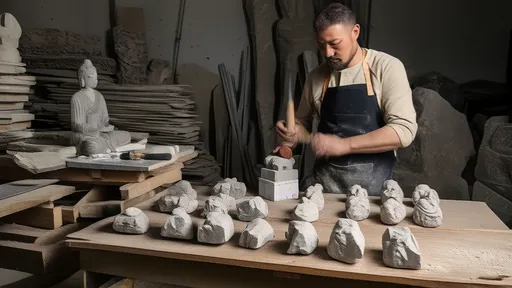
The physics of shadow formation presents unique considerations when working with carved, cast or constructed three-dimensional artworks. Unlike two-dimensional pieces where lighting primarily concerns color temperature and even coverage, sculpture demands careful analysis of form, texture and viewing angles. Professional lighting designers now employ advanced 3D modeling software to simulate how shadows will fall across complex surfaces before installing a single fixture. These digital tools allow for precise prediction of how raking light will emphasize tool marks in stone or how backlighting might transform translucent resin into glowing forms.
Material response to illumination remains a critical factor in exhibition lighting schemes. The same spotlight that makes polished marble vibrate with inner luminosity can reduce intricately carved wood to flat silhouettes if improperly positioned. Contemporary solutions often combine multiple light sources - diffused overhead washes for general visibility, focused spots for dramatic modeling, and strategically placed reflectors to fill in overly harsh shadows. The Tate Modern's recent Richard Serra exhibition demonstrated masterful control of these variables, using industrial-scale lighting to articulate the massive steel curves while maintaining crucial shadow definition that revealed their imposing mass.
Emerging technologies continue expanding possibilities for shadow manipulation in sculpture display. Programmable motorized fixtures can now follow visitors' movement around an installation, maintaining optimal shadow relationships from multiple viewpoints. Some experimental galleries employ responsive systems where the lighting dynamically adjusts based on real-time analysis of crowd density and movement patterns. These developments raise fascinating questions about whether shadow should be treated as an immutable property of the artwork or as a flexible element that changes with audience interaction.
Conservation concerns impose necessary limitations on lighting designs for sensitive materials. Paper sculptures, delicate textiles and light-sensitive pigments require careful balancing between visual impact and long-term preservation. Museum-grade LED systems with UV/IR filtration have become indispensable tools, allowing dramatic presentations without accelerating material degradation. The delicate dance between revelation and protection becomes particularly poignant when lighting ancient stone carvings, where modern technology must illuminate centuries-old surfaces without erasing the very patina of age that gives them historical value.
The psychological impact of sculptural shadows represents another dimension increasingly considered in exhibition design. Curators note how shadow patterns can create subliminal emotional cues - elongated shadows might evoke melancholy, while crisp geometric shadows could suggest precision and modernity. Some installations deliberately employ conflicting shadow directions to create visual tension, or use colored light sources to produce chromatic shadows that become sculptural elements in their own right. These techniques transform the exhibition space into an immersive environment where light and shadow perform as active collaborators with the physical artworks.
As the field progresses, lighting design for sculpture exhibitions continues breaking free from traditional conventions. The once rigid separation between architectural lighting and display lighting has blurred, with many designers now creating holistic luminous environments where the boundaries between artwork and exhibition space dissolve. This integrated approach recognizes that shadows cast by sculptures don't simply disappear at the base of plinths but interact with walls, floors and even viewers to create constantly evolving spatial compositions. The most forward-thinking exhibitions now consider shadow as a medium rather than a byproduct, opening new avenues for experiencing three-dimensional art in the twenty-first century.

By /Aug 11, 2025

By /Aug 11, 2025

By /Aug 11, 2025
By /Aug 11, 2025

By /Aug 11, 2025
By /Aug 11, 2025
By /Aug 11, 2025
By /Aug 11, 2025
