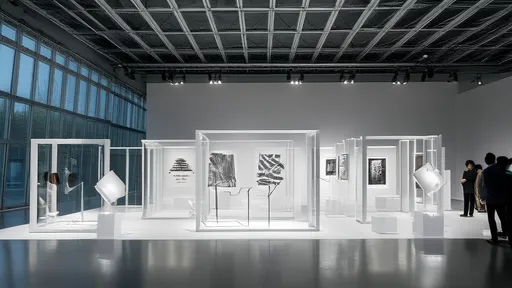
As summer approaches, art enthusiasts and culture seekers in China have a unique opportunity to witness the future of contemporary art. The annual graduation exhibitions at two of the country's most prestigious art institutions - Central Academy of Fine Arts (CAFA) in Beijing and China Academy of Art (CAA) in Hangzhou - offer free admission on specific days, making these significant cultural events accessible to the public.
The graduation shows represent more than just student assessments; they serve as vital platforms connecting emerging artists with the broader art community. These exhibitions typically showcase hundreds of works across diverse mediums including oil painting, sculpture, installation, digital media, and experimental art forms. The free admission days eliminate financial barriers, allowing students' families, local residents, and international visitors to engage with China's next generation of artistic talent.
Central Academy of Fine Arts in Beijing maintains a tradition of opening its graduation exhibition to the public without charge during the final week of the month-long show. This year's exhibition features works from all departments, with particular attention on the experimental projects from the School of Experimental Art and the technologically innovative pieces from the School of Design. The free admission period typically draws large crowds, so visitors are advised to arrive early.
Meanwhile, China Academy of Art in Hangzhou offers an even more generous free admission policy, with no entrance fee on weekends throughout the exhibition period. The CAA show is renowned for its integration of traditional Chinese aesthetics with contemporary practices, especially visible in the Chinese painting and calligraphy departments. The sprawling campus allows for large-scale installations and performance art pieces that utilize the academy's beautiful lakeside setting.
These free admission days serve multiple purposes beyond public accessibility. They provide graduating students with crucial exposure to potential galleries, collectors, and employers. For many young artists, having their work seen by thousands of visitors during these free periods can lead to career-changing opportunities. The exhibitions also function as recruitment tools for the academies, inspiring prospective students with the quality and diversity of graduate work.
The social dimension of these events cannot be overstated. On free admission days, the galleries transform into vibrant meeting spaces where established artists mingle with students, critics engage with the public, and children experience professional art for possibly the first time. This democratization of high-level art education reflects China's growing emphasis on cultural participation and creative industry development.
Both institutions carefully plan these free periods to maximize public benefit while maintaining exhibition quality. CAFA employs timed entry slots during its free week to prevent overcrowding, while CAA spreads out its free days to accommodate different visitor schedules. Security and conservation measures remain stringent even during free admission periods, ensuring the protection of delicate artworks.
For international visitors, these free admission days offer unparalleled insight into China's contemporary art education system. The exhibitions reveal emerging trends and thematic concerns among young Chinese artists, from responses to urbanization and environmental issues to explorations of cultural identity in a globalized world. The bilingual labeling at both institutions helps foreign guests navigate the shows.
Beyond the visual feast, the free admission periods include supplementary programming. Artist talks, guided tours, and demonstration workshops often accompany the main exhibitions. These activities provide context for the works on display and create opportunities for direct engagement between creators and audience members.
The economic impact of these policies deserves mention. While the academies forego ticket revenue during free periods, they gain immeasurable cultural capital and public goodwill. Local businesses near both campuses report increased activity during free admission days, from cafes and restaurants to art supply stores and bookshops. This demonstrates how cultural policies can stimulate broader economic benefits.
As China's art market continues to mature, these graduation exhibitions have gained significance as talent pipelines for galleries and cultural institutions. Collectors and curators increasingly attend the free admission days specifically to identify promising artists before they enter the professional arena. Several now-established Chinese contemporary artists first gained attention during their academy graduation shows.
The free admission policies at CAFA and CAA graduation exhibitions represent a forward-thinking approach to art education and public cultural engagement. By removing financial barriers at critical moments, these prestigious institutions fulfill their educational missions while contributing to China's vibrant cultural ecosystem. For anyone interested in the future directions of Chinese art, these free viewing opportunities provide an essential window into emerging practices and perspectives.
The art world has witnessed a resurgence of interest in traditional oil painting techniques, particularly the indirect method known as glazing. This layered approach, which dominated European painting from the Renaissance through the 19th century, creates luminous depth through successive transparent applications that modern direct painting often struggles to replicate. Contemporary artists are rediscovering how these historical techniques can solve contemporary aesthetic challenges while connecting them to centuries of artistic heritage.
Unlike alla prima (wet-on-wet) methods where painters mix colors on the palette, indirect painting builds images through multiple transparent layers called glazes. Each thin veil of pigment suspended in medium modifies what lies beneath, creating optical mixtures that vibrate with inner light. The technique demands patience - sometimes requiring weeks between layers for proper drying - but rewards practitioners with chromatic richness impossible to achieve through direct mixing. Titian's golden highlights, Rembrandt's glowing shadows, and Vermeer's pearlescent skies all owe their magic to this disciplined layering process.
Modern practitioners face unique challenges when adopting these Old Master techniques. Contemporary linseed oils and resins behave differently than those used by Renaissance painters, requiring adapted recipes for painting mediums. Some artists meticulously recreate historical materials, grinding their own pigments and brewing walnut oil mediums, while others develop modern equivalents using alkyd resins for faster drying times. The current revival benefits from scientific analysis of masterworks, allowing today's painters to understand exactly how Rubens achieved his flesh tones or how Caravaggio built his dramatic chiaroscuro.
Educational institutions have noticed this growing interest. Several European academies now offer specialized programs in historical techniques, complete with workshops on preparing traditional lead-primed panels. In the United States, private ateliers report increased enrollment in master copy programs where students spend months recreating Baroque paintings layer by layer. This educational shift represents more than nostalgia; students discover how indirect methods develop their ability to see subtle value relationships and understand color theory at profound levels.
The commercial art market has begun recognizing the value of contemporary works using historical techniques. Galleries specializing in classical realism report collectors paying premiums for paintings demonstrating masterful glazing. "There's an intimacy to properly executed indirect painting," notes London gallerist Eleanor Whitmore. "The surface has a depth that changes with viewing angle and lighting conditions - it breathes in ways that flat opaque painting simply can't." Auction results confirm this trend, with contemporary realist works showing strong indirect technique commanding prices rivaling abstract pieces by established names.
Digital technology plays an unexpected role in this traditional medium's revival. High-resolution scans of masterworks allow artists to study brushwork invisible to the naked eye, while spectral imaging reveals abandoned compositions beneath famous paintings. Some painters project these images onto their canvases to understand the build-up of layers, though purists argue this shortcuts the essential discipline of developing an artist's eye. Online communities share glaze recipes and drying time experiments, creating a global network of technical knowledge that would have taken lifetimes to accumulate during the Renaissance.
Conservation concerns have also driven renewed interest in historical methods. As modern paintings from the mid-20th century show premature cracking and discoloration, conservators note how well many Old Master paintings have endured. "The indirect method isn't just aesthetically superior," asserts Metropolitan Museum conservator Dr. Helena Pierce, "it's often more archivally sound. These paintings were meant to last centuries, not decades." Contemporary artists concerned with longevity increasingly adopt these time-tested approaches, particularly for commissioned portraits and public works.
Beyond technical considerations, the philosophical implications of indirect painting resonate in our accelerated digital age. The method demands contemplation at every stage - from initial imprimatura to final glazes - creating a meditative practice starkly opposed to instant results culture. Artists describe how the slow process changes their relationship with both the work and their perception of time. "You stop thinking in terms of finishing," explains painter Gabriel Moretti, "and start experiencing each layer as a complete state of being. The painting teaches you patience as much as technique."
Exhibitions comparing historical and contemporary indirect works reveal surprising continuities. When hung alongside Vermeer's "Girl with a Pearl Earring," a 21st-century portrait using identical layering techniques demonstrates how the method still achieves that enigmatic glow no direct approach can capture. Museums now actively commission contemporary artists to create new works using historical methods specifically for these dialogic exhibitions, bridging centuries through shared technique.
The future of indirect painting appears vibrant as younger artists blend traditional methods with contemporary subjects. Urban landscapes gain unexpected luminosity through glazing techniques developed for religious altarpieces. Abstract artists employ transparent layers to create depth that challenges spatial perception. Even digital artists study Old Master glazing to enhance their rendering skills. This cross-pollination suggests the technique's revival isn't mere historical reenactment, but rather the rediscovery of a visual language with untapped potential for contemporary expression.
As the art world cycles through fleeting trends, the enduring power of indirect painting reminds us that some discoveries aren't new inventions, but rather the recovery of forgotten wisdom. The current revival represents neither rejection of modernism nor uncritical traditionalism, but rather a thoughtful integration of historical knowledge with contemporary vision. In studios worldwide, the patient application of transparent layers continues its centuries-old dialogue between discipline and revelation, proving that certain artistic truths remain timeless.
By /Aug 13, 2025
By /Aug 13, 2025
By /Aug 13, 2025
By /Aug 13, 2025
By /Aug 13, 2025
By /Aug 13, 2025

By /Aug 13, 2025
By /Aug 13, 2025
