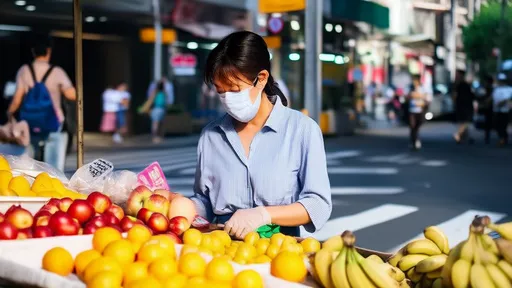
The so-called "Fruit Stall Theory" has become something of a legend among Chinese applicants for U.S. visas. Unlike official guidelines or documented procedures, this theory represents the collective wisdom distilled from thousands of visa interviews at U.S. consulates across China. At its core, the metaphor suggests that consular officers view visa applicants much like customers at a fruit stall - they must quickly assess which "fruits" are worth selecting while filtering out those that don't meet their standards.
This unspoken framework gained traction particularly after the post-9/11 visa policy tightening, when approval rates became more unpredictable. Seasoned visa consultants began noticing patterns in how officers made snap judgments during the brief interview window. The theory holds that consular officers, facing hundreds of applications daily, develop mental shortcuts similar to how a fruit vendor might quickly evaluate produce - checking for obvious defects, assessing freshness indicators, and making rapid value determinations.
The Selection Process at the Window
Much like a shopper inspecting apples, visa officers reportedly look for certain surface indicators first. A well-prepared application folder functions like unblemished fruit skin - it suggests the applicant has nothing to hide. Consistent travel history acts as the equivalent of proper ripeness, demonstrating the applicant is neither too green (likely to overstay) nor too ripe (potential security concerns). The interview itself becomes the equivalent of checking for worms - any inconsistencies or red flags that might be lurking beneath the surface.
Veteran applicants swear they can almost see the mental checklist being processed behind the officer's eyes: Are documents complete? Does the stated purpose align with visa category? Is there sufficient financial "weight" to demonstrate serious intent? These become the tactile tests similar to squeezing fruit for firmness. The theory suggests officers have developed an almost instinctual sense for which applications will yield satisfactory "flavor" with minimal risk.
The Bruised Fruit Phenomenon
Certain characteristics reportedly trigger immediate rejection, much like produce with visible damage. Single young adults from certain provinces face particular scrutiny, viewed as high-risk for overstaying. Applicants with minimal travel history are seen as unproven, like unripe fruit of uncertain quality. Even seemingly positive factors can backfire - multiple previous U.S. visits might raise eyebrows about dependency, similar to fruit that's been handled too many times.
Interestingly, the theory accounts for seasonal variations mirroring agricultural cycles. Student visa approvals allegedly bloom in spring like cherries, while tourist visas supposedly ripen in summer like peaches. Winter applications, according to this folk wisdom, face tougher scrutiny as officers become more selective during low seasons, much like shoppers becoming pickier when produce is scarce.
The Cultural Harvest
This metaphor has taken root particularly strongly in Chinese applicant circles because it resonates with cultural familiarity. The imagery of careful selection at market stalls translates well to a population accustomed to intense scrutiny in various bureaucratic processes. It also provides psychological comfort - framing rejection as simply not being what the "buyer" wanted that day, rather than a personal failing.
Visa coaches have refined the analogy further, developing entire preparation strategies around it. They advise applicants to "display their best side first" like a vendor arranging prime produce up front. Documentation becomes "protective packaging" preventing damage during handling. Even interview attire gets compared to the waxy coating that preserves fruit's appeal.
The theory's persistence reveals deeper truths about the visa process despite its unofficial nature. It acknowledges the inherent subjectivity in decisions made under time pressure with limited information. Like any agricultural selection, there's always an element of unpredictability - the same applicant might get different results on different days, just as fruit quality varies between shipments.
Beyond the Metaphor
While the fruit stall analogy provides memorable imagery, visa professionals caution against over-reliance on folk theories. The actual decision-making process incorporates complex legal standards, constantly evolving policy directives, and individual officer discretion. What the theory captures accurately is the reality that first impressions matter tremendously in these brief encounters.
Applicants would do well to remember that beneath the metaphorical framework lie very real concerns about immigration intent, document authenticity, and security considerations. The best preparation combines understanding these unofficial patterns while thoroughly addressing official requirements. Like selecting premium fruit, success often comes down to presenting your best qualities clearly and without defects for evaluation.
The enduring popularity of this theory speaks to the very human need to find patterns in uncertain processes. As long as visa interviews remain brief encounters with significant consequences, applicants will continue developing these metaphorical frameworks to navigate the experience. The fruit stall analogy, for all its simplicity, has proven remarkably durable in helping applicants mentally prepare for one of the most stressful conversations of their international journeys.
Singapore has long been known as a global hub for travel and commerce, and its strategic location makes it an ideal stopover for travelers crossing continents. One of the key advantages for transit passengers is the 96-hour Visa-Free Transit Facility, which allows eligible travelers to explore the vibrant city-state without needing a visa. This policy is designed to encourage visitors to experience Singapore’s rich culture, cuisine, and attractions even during a short layover.
The 96-hour transit rule applies to nationals of several countries, including India, China, and many others, provided they meet specific conditions. Travelers must hold a valid onward ticket departing Singapore within 96 hours and possess a visa (if required) for their next destination. Airlines and immigration authorities strictly enforce these rules, so passengers should ensure they have all necessary documentation before attempting to enter Singapore under this scheme.
For those eligible, this transit window offers a fantastic opportunity to step out of the airport and immerse themselves in Singapore’s dynamic atmosphere. From the futuristic Gardens by the Bay to the bustling streets of Chinatown, there is no shortage of sights to explore. Food lovers can indulge in hawker center delights like Hainanese chicken rice or chili crab, while shoppers can head to Orchard Road for retail therapy. Even with limited time, the city’s efficient public transport makes it easy to cover significant ground.
However, travelers should be mindful of the strict entry requirements. Immigration officers have the discretion to deny entry if they suspect the transit privilege is being misused—for example, if a passenger repeatedly uses Singapore as a short-term destination without a genuine onward journey. It’s also important to note that the 96-hour period begins at the time of entry, so planning an itinerary wisely is essential to make the most of the stay.
Beyond tourism, the 96-hour transit policy supports Singapore’s economy by boosting spending in retail, dining, and entertainment sectors. Many transit passengers take advantage of the city’s world-class airport, Changi, which offers free city tours for those with layovers of at least five hours. These tours provide a curated glimpse of Singapore’s highlights, perfect for time-strapped visitors.
In summary, Singapore’s 96-hour visa-free transit facility is a well-structured initiative that benefits both travelers and the local economy. By offering a hassle-free way to experience the Lion City, it reinforces Singapore’s reputation as a welcoming and efficient transit destination. Whether you’re stopping over for business or leisure, this policy makes it possible to turn a brief layover into a memorable mini-vacation.
By /Aug 13, 2025

By /Aug 13, 2025

By /Aug 13, 2025

By /Aug 13, 2025

By /Aug 13, 2025
By /Aug 13, 2025

By /Aug 13, 2025

By /Aug 13, 2025
